
BABOK Guide v3 — Kiến trúc tổng thể
BABOK (Business Analysis Body of Knowledge) Guide v3 là tiêu chuẩn quốc tế cho nghề BA. Với CBAP, bạn cần hiểu BABOK không chỉ ở mức áp dụng (apply) mà ở mức phân tích và tổng hợp (analyze & synthesize).
Kiến trúc BABOK
BACCM — Business Analysis Core Concept Model
BACCM là nền tảng của mọi hoạt động BA. Gồm 6 core concepts liên kết chặt chẽ:
6 Core Concepts chi tiết
| Concept | Definition | CBAP Focus |
|---|---|---|
| Change | Act of transformation in response to a need | Hiểu change ở enterprise level, không chỉ project |
| Need | Problem or opportunity to be addressed | Distinguish giữa stated needs vs real needs |
| Solution | Specific way of satisfying needs | Evaluate multiple solutions, recommend optimal |
| Stakeholder | Individual/group with relationship to change | Manage complex stakeholder ecosystems |
| Value | Worth, importance of something to stakeholder | Quantify value, understand value conflicts |
| Context | Circumstances that influence the change | Analyze internal + external context factors |
Câu hỏi CBAP thường test khả năng liên kết giữa các core concepts. Ví dụ: "Khi context thay đổi (M&A), BA cần reassess những gì?" → Change, Stakeholder, Value đều bị ảnh hưởng.
6 Knowledge Areas — Mối quan hệ
Flow giữa các Knowledge Areas
30 Tasks phân bổ theo Knowledge Area
| KA | Tasks | CBAP Weight |
|---|---|---|
| BAPM | Plan BA Approach, Plan Stakeholder Engagement, Plan BA Governance, Plan BA Information Management, Identify BA Performance Improvements | 14% |
| EC | Prepare for Elicitation, Conduct Elicitation, Confirm Elicitation Results, Communicate BA Information, Manage Stakeholder Collaboration | 12% |
| RLCM | Trace Requirements, Maintain Requirements, Prioritize Requirements, Assess Requirements Changes, Approve Requirements | 15% |
| SA | Analyze Current State, Define Future State, Assess Risks, Define Change Strategy | 15% |
| RADD | Specify and Model Requirements, Verify Requirements, Validate Requirements, Define Requirements Architecture, Define Design Options, Analyze Potential Value and Recommend Solution | 30% |
| SE | Measure Solution Performance, Analyze Performance Measures, Assess Solution Limitations, Assess Enterprise Limitations, Recommend Actions to Increase Solution Value | 14% |
5 Perspectives — Trọng tâm CBAP
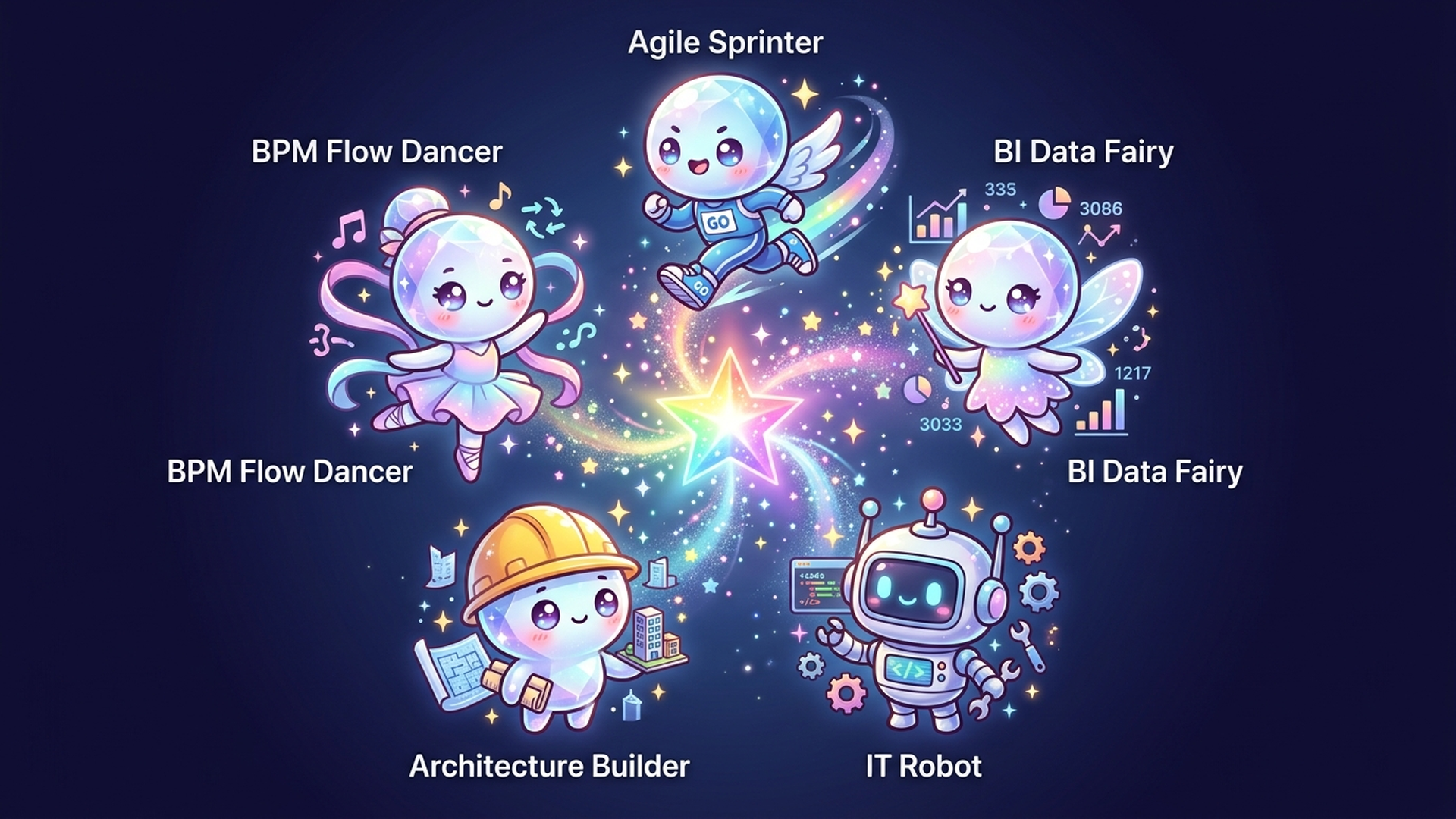
CBAP test 5 BA Perspectives sâu hơn nhiều so với CCBA. Bạn cần hiểu mỗi perspective ảnh hưởng đến BA practice như thế nào, và khi nào nên apply perspective nào.
Tổng quan 5 Perspectives
1. Agile Perspective
| Aspect | Details |
|---|---|
| Scope | Adaptive, iterative, incremental approach |
| BA Role | Product Owner, embedded in Agile team |
| Requirements | User stories, acceptance criteria, backlog |
| Key Practices | Continuous elicitation, just-in-time analysis, iterative validation |
| KA Impact | Planning = adaptive, Elicitation = continuous, RADD = lightweight |
CBAP Focus: Khi nào Agile approach phù hợp? Khi nào không? Trade-offs giữa Agile vs Predictive.
2. Business Intelligence Perspective
| Aspect | Details |
|---|---|
| Scope | Data-driven decision making |
| BA Role | BI Analyst, Data Analyst |
| Requirements | Data requirements, reporting needs, analytics KPIs |
| Key Practices | Data modeling, ETL requirements, dashboard design |
| KA Impact | RADD = data models, SE = analytics performance |
CBAP Focus: BA role trong BI initiatives, data governance, analytics requirements.
3. Information Technology Perspective
| Aspect | Details |
|---|---|
| Scope | IT solution design and delivery |
| BA Role | IT Business Analyst, Systems Analyst |
| Requirements | Functional & Non-functional requirements, system integration |
| Key Practices | Use cases, system modeling, technical feasibility |
| KA Impact | RADD = system models, SA = build vs buy |
4. Business Architecture Perspective
| Aspect | Details |
|---|---|
| Scope | Enterprise-level capability mapping |
| BA Role | Business Architect, Enterprise BA |
| Requirements | Capability models, value streams, organizational design |
| Key Practices | Capability mapping, value chain analysis, business model canvas |
| KA Impact | SA = enterprise strategy, SE = enterprise value |
CBAP Focus: Enterprise-level thinking — đây là trọng tâm phân biệt CBAP vs CCBA.
5. Business Process Management Perspective
| Aspect | Details |
|---|---|
| Scope | Process optimization and automation |
| BA Role | Process Analyst, BPM Analyst |
| Requirements | Process models, workflow automation, process KPIs |
| Key Practices | BPMN modeling, process mining, lean/six sigma |
| KA Impact | RADD = process models, SE = process performance |
Perspectives trong exam
Underlying Competencies
BABOK Define 6 nhóm Underlying Competencies — đây là nền tảng kỹ năng mà mọi BA cần:
| Competency | Key Skills | CBAP Application |
|---|---|---|
| Analytical Thinking & Problem Solving | Creative thinking, Decision making, Learning, Problem solving, Systems thinking, Conceptual thinking, Visual thinking | Enterprise-level problem decomposition |
| Behavioral Characteristics | Ethics, Personal accountability, Trustworthiness, Organization, Adaptability | Leading complex stakeholder groups |
| Business Knowledge | Business acumen, Industry knowledge, Organization knowledge, Solution knowledge, Methodology knowledge | Strategic decision context |
| Communication Skills | Verbal, Non-verbal, Written, Listening | Executive communication |
| Interaction Skills | Facilitation, Leadership & influencing, Teamwork, Negotiation, Conflict resolution, Teaching | Multi-level stakeholder management |
| Tools & Technology | Office productivity, BA tools, Communication technology | Technology-aware analysis |
CBAP không test competencies trực tiếp, nhưng câu hỏi scenario thường có đáp án đúng là đáp án thể hiện best practice về competencies. Ví dụ: khi có conflict, đáp án "facilitate negotiation" (Interaction Skills) thường đúng hơn "escalate to management".
Requirements Classification
4 loại Requirements
Chi tiết và ví dụ
| Loại | Definition | CBAP Example |
|---|---|---|
| Business Requirements | Statement of goals, objectives, outcomes | "Giảm thời gian xử lý đơn hàng 50% trong 12 tháng" |
| Stakeholder Requirements | Needs of specific stakeholders | "Nhân viên bán hàng cần tra cứu tồn kho real-time" |
| Solution Requirements (FR) | Capabilities the solution must have | "Hệ thống phải hỗ trợ multi-currency cho 5 loại tiền" |
| Solution Requirements (NFR) | Quality attributes | "Response time < 2 giây cho 99% requests" |
| Transition Requirements | Temporary capabilities for migration | "Data migration từ legacy system trong 48 giờ downtime" |
CBAP test khả năng trace requirements từ Business → Stakeholder → Solution → Transition và ngược lại. Nếu solution requirement không trace được về business requirement, đó là scope creep hoặc gold plating.
Input/Output Framework
Hiểu mối quan hệ Input → Task → Output
Mỗi Task trong BABOK có:
- Inputs: Thông tin cần thiết để thực hiện task
- Elements: Guidelines và techniques để thực hiện
- Output: Kết quả của task (thường là input cho task khác)
Khi gặp câu hỏi "BA has completed [X], what should BA do NEXT?" — hãy nghĩ về output của X là input cho task nào tiếp theo trong flow.
📝 Tóm tắt kiến thức nổi bật
- BACCM ở CBAP level: không chỉ biết 6 concepts mà phải hiểu tương tác qua lại giữa chúng
- 6 KA relationships: KAs không độc lập — Output của KA này là Input của KA khác (ví dụ: SA → RADD → SE)
- 5 Perspectives: chọn dựa trên context dự án; CBAP thường kết hợp nhiều perspectives (IT + Agile, Architecture + BPM)
- Requirements Classification: Business → Stakeholder → Solution (Functional + NFR) → Transition — hierarchy rõ ràng
- Underlying Competencies: CBAP test gián tiếp qua scenarios — đáp án đúng thường thể hiện best practice về competencies
- Input→Task→Output framework là chìa khóa — hiểu flow này giúp trả lời "what comes next?" questions
📋 Bài kiểm tra trắc nghiệm — Bài 2
Làm 10 câu bên dưới trong 17 phút. Chọn MỘT đáp án đúng nhất. Đáp án ở cuối bài.
Câu 1. Trong BACCM, khi "Context" thay đổi (ví dụ: regulation mới), điều gì xảy ra?
- A. Chỉ Solution thay đổi
- B. Tất cả 5 concepts còn lại có thể bị ảnh hưởng (Need, Change, Solution, Stakeholder, Value)
- C. Chỉ Need thay đổi
- D. Không ảnh hưởng gì nếu Solution đã deploy
Câu 2. Output chính của Strategy Analysis là input cho KA nào?
- A. Solution Evaluation
- B. BA Planning & Monitoring
- C. Requirements Analysis & Design Definition
- D. Elicitation & Collaboration
Câu 3. BA đang làm dự án enterprise transformation. Cần optimize processes VÀ redesign IT systems. Perspectives nào nên combine?
- A. Agile + BI
- B. BPM + IT
- C. Business Architecture + Agile
- D. BI + BPM
Câu 4. Transition Requirements khác Solution Requirements ở chỗ:
- A. Transition Requirements tồn tại vĩnh viễn
- B. Transition Requirements chỉ cần trong giai đoạn chuyển đổi và không tồn tại trong solution cuối cùng
- C. Solution Requirements cho giai đoạn chuyển đổi
- D. Không có sự khác biệt
Câu 5. Câu hỏi CBAP hỏi: "Khi phát hiện conflict giữa 2 stakeholders, BA nên..." — đáp án đúng thường thể hiện competency nào?
- A. Tools & Technology Knowledge
- B. Interaction Skills & Communication
- C. Analytical Thinking
- D. Business Knowledge
Câu 6. BABOK v3 Input→Task→Output pattern: nếu output của Task A bị delay, điều gì xảy ra?
- A. Chỉ Task A bị ảnh hưởng
- B. Task B sử dụng output đó cũng bị delay (cascading impact)
- C. Không ảnh hưởng vì Tasks độc lập
- D. Chỉ ảnh hưởng nếu cùng KA
Câu 7. "Value" trong BACCM được xác định bởi:
- A. BA team
- B. Development team
- C. Stakeholders — vì value là phải perception, khác nhau tùy stakeholder
- D. Project sponsor alone
Câu 8. Enterprise BA đang map toàn bộ capabilities của tổ chức, identify gaps, và plan transformation. Perspective nào phù hợp nhất?
- A. Agile
- B. Business Intelligence
- C. Business Architecture
- D. Information Technology
Câu 9. Non-Functional Requirement "Hệ thống phải compliant với GDPR" thuộc NFR category nào?
- A. Performance
- B. Security
- C. Compliance/Regulatory
- D. Availability
Câu 10. Tại CBAP level, BA cần hiểu capabilities ở cả 5 Perspectives vì:
- A. Đề thi hỏi riêng từng perspective
- B. Senior BA phải adapt approach dựa trên context — mỗi dự án cần perspective khác nhau hoặc combination
- C. Phải expert ở cả 5
- D. Để pass requirement 4/6 KAs
🔑 Đáp án & Giải thích
| Câu | Đáp án | Giải thích |
|---|---|---|
| 1 | B | BACCM concepts are interconnected. Context change → ripple effects across all other concepts. |
| 2 | C | SA outputs (business needs, future state, solution approach) feed into RADD for requirements specification. |
| 3 | B | BPM (optimize processes) + IT (redesign systems) = best combination for process + technology transformation. |
| 4 | B | Transition Reqs = temporary (data migration, training, parallel run). Once transition complete, they retire. |
| 5 | B | Conflict resolution = Interaction Skills & Communication competency — facilitate, negotiate, collaborate. |
| 6 | B | Tasks are interdependent. Output delay → cascading impact on downstream tasks that use it as input. |
| 7 | C | Value is in the eye of the stakeholder — different stakeholders perceive different value from same solution. |
| 8 | C | Business Architecture = capability mapping, value streams, enterprise-level transformation planning. |
| 9 | C | GDPR compliance = Regulatory/Compliance NFR category. Security is about protection mechanisms. |
| 10 | B | Senior BA adapts approach per context. No one perspective fits all projects — combining is common. |
📊 Thang đánh giá
| Số câu đúng | Đánh giá | Hành động |
|---|---|---|
| 9-10 | ⭐ Xuất sắc | BABOK chuyên sâu nắm vững! |
| 7-8 | ✅ Tốt | Ôn lại KA relationships và Perspectives combinations |
| 5-6 | ⚠️ Trung bình | Đọc lại Input→Task→Output framework |
| < 5 | ❌ Cần ôn lại | BABOK foundation là nền tảng CBAP — cần nắm chắc |
Tiếp theo: BA Planning & Monitoring nâng cao cho CBAP 👉