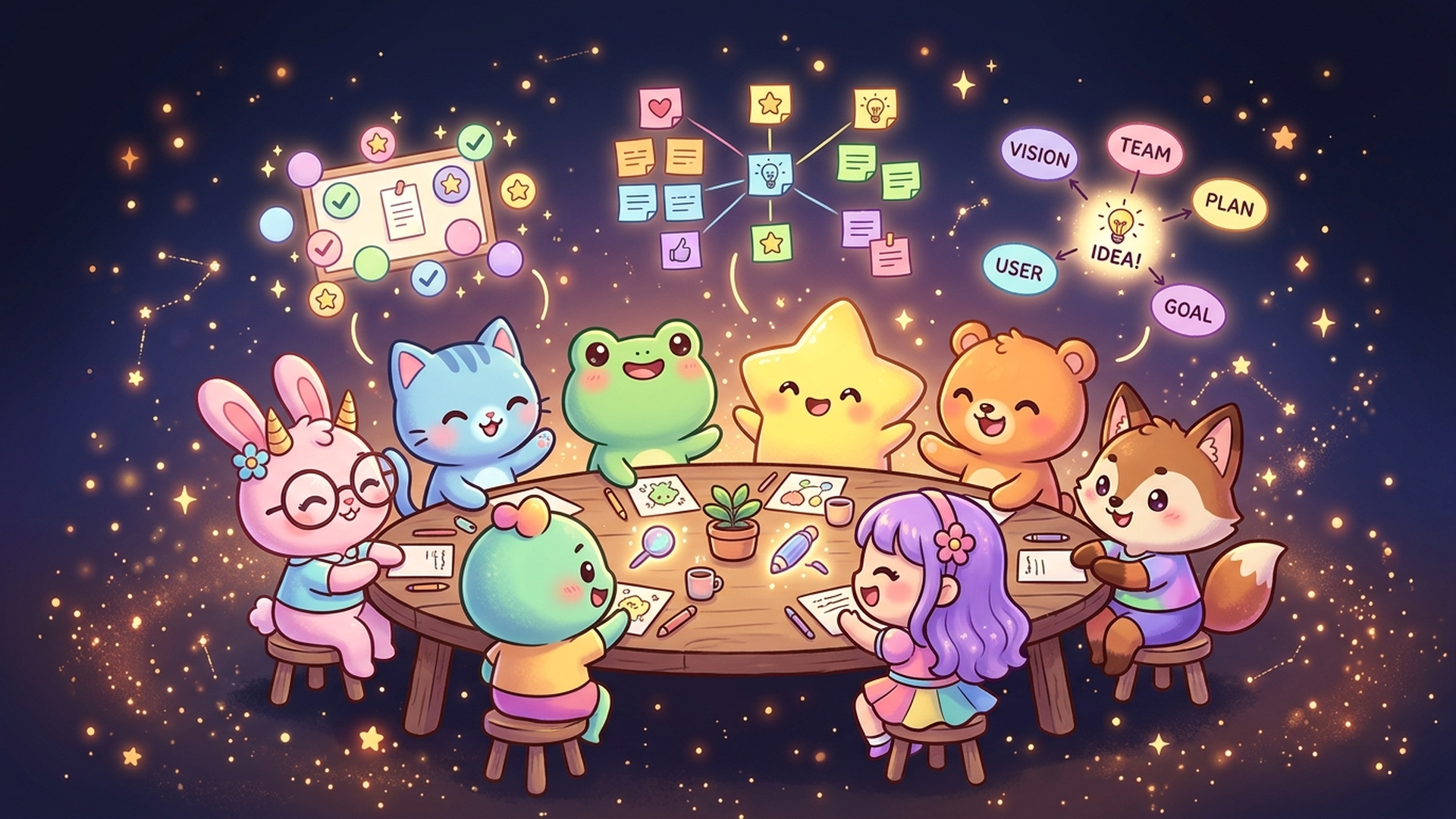
Elicitation & Collaboration — CBAP Level (12%)
Mặc dù E&C chỉ chiếm 12% trong CBAP (thấp nhất), đây lại là KA xuyên suốt — mọi KA khác đều cần elicitation và collaboration. CBAP test ở mức advanced facilitation và complex stakeholder management.
5 Tasks trong E&C
Task 1-2: Prepare & Conduct Elicitation
Chọn kỹ thuật theo context — CBAP Decision Matrix
CBAP-level: Advanced Elicitation Strategies
| Technique | CCBA Level | CBAP Level |
|---|---|---|
| Interview | Ask prepared questions | Adapt dynamically, probe for hidden needs, identify unstated assumptions |
| Workshop | Facilitate structured session | Design workshop series for complex problems, manage power dynamics |
| Observation | Watch & document | Ethnographic observation, identify process inefficiencies stakeholders can't articulate |
| Prototyping | Create mockups | Use prototypes to validate business model viability, not just UI |
| Survey | Distribute questionnaire | Design statistically valid surveys, analyze quantitative data |
Elicitation Planning Template
| Planning Element | CBAP Consideration |
|---|---|
| Objectives | tied to business goals, not just "gather requirements" |
| Scope | Bounded by business capability being analyzed |
| Participants | Include diverse perspectives (operational, strategic, technical) |
| Logistics | Multi-site, multi-timezone, cultural considerations |
| Risks | Stakeholder unavailability, bias, power dynamics |
| Supporting materials | Pre-read materials, models, data for discussion |
| Confirmation approach | How to validate findings with participants |
Task 3: Confirm Elicitation Results
Confirmation Workflow
Common Confirmation Issues
| Issue | Root Cause | CBAP Response |
|---|---|---|
| Conflicting information | Different perspectives | Organize reconciliation session, find common ground |
| Incomplete information | Wrong stakeholders or technique | Identify right stakeholders, adjust technique |
| Ambiguous statements | Vague language | Use modeling to clarify, create precise definitions |
| Assumed context | Stakeholder knows too much | Use "5 Whys" to surface assumptions |
| Political filtering | Stakeholder has agenda | Triangulate with multiple sources |
Confirm Elicitation Results chỉ xác nhận BA đã hiểu đúng những gì stakeholder nói. Nó KHÔNG phải approve requirements. Approval nằm trong RLCM (Requirements Life Cycle Management).
Task 4: Communicate BA Information
Communication Strategy Matrix
Communication Formality Spectrum
| Informal | Semi-formal | Formal |
|---|---|---|
| Verbal updates | Email summaries | BRD/SRS documents |
| Whiteboard sketches | Wiki/Confluence pages | Signed-off specifications |
| Instant messaging | Meeting minutes | Governance reports |
| Stand-up updates | Status presentations | Compliance documentation |
CBAP guideline: Choose formality level based on:
- Regulatory requirements
- Organizational culture
- Stakeholder expectations
- Audit requirements
- Project risk level
Task 5: Manage Stakeholder Collaboration
Complex Stakeholder Scenarios
Conflict Resolution Framework — CBAP Level
| Strategy | When to Use | Example |
|---|---|---|
| Collaborate (Win-Win) | Time available, relationship important | Sponsor & Users disagree on priority → Workshop to find alignment |
| Compromise (Lose-Lose partial) | Equal power, acceptable outcome | Both departments want different features → Split scope |
| Accommodate (Yield) | Relationship more important | SME wrong on minor detail → Accept to maintain trust |
| Compete (Win-Lose) | Urgent decision, you're right | Safety requirement → Insist despite resistance |
| Avoid (Withdraw) | Trivial issue, emotions high | Cosmetic argument → Table for later |
Trong CBAP exam, đáp án đúng cho conflict resolution thường là Collaborate hoặc Compromise. CBAP hiếm khi chọn Compete hay Avoid trừ khi scenario rõ ràng.
Building Trust Strategies
Advanced Facilitation Techniques
Multi-stakeholder Workshop Design
Facilitation Anti-patterns
| Anti-pattern | Problem | CBAP Solution |
|---|---|---|
| HIPPO (Highest Paid Person's Opinion) | Senior dominates | Anonymous voting, written input first |
| Groupthink | No dissenting views | Devil's advocate role, anonymous survey |
| Analysis Paralysis | Can't decide | Timeboxed decisions, "good enough" criteria |
| Scope Creep | Discussion wanders | Parking lot, strict agenda, time keeper |
| Silent Majority | Quiet voices ignored | Round-robin, breakout groups, online polls |
Master facilitator = neutral, objective, process-focused. BA facilitates nhưng KHÔNG quyết định. BA đảm bảo best decision emerges từ group, không phải force BA's opinion.
Câu hỏi CBAP thường gặp về E&C
Scenario 1
BA đang facilitate workshop cho 15 stakeholders từ 3 departments khác nhau. Hai nhóm có quyền lợi đối lập về scope. BA nên:
A. Breakout groups → synthesize findings
B. Set decision criteria first, then evaluate options objectively ✅
C. Ask sponsor to decide
D. Cancel workshop, interview individually
Scenario 2
Sau elicitation, BA nhận ra stakeholder A nói X nhưng stakeholder B nói ngược lại. BA nên:
A. Chọn version của stakeholder có quyền cao hơn
B. Tổ chức reconciliation session để identify root of disagreement ✅
C. Document cả hai version
D. Hỏi PM quyết định
Scenario 3
Key stakeholder liên tục không có thời gian cho elicitation sessions. BA nên:
A. Skip stakeholder, dùng available info
B. Escalate lên sponsor ngay
C. Offer múltiple alternatives: async surveys, brief focused calls, document review ✅
D. Delay project until stakeholder available
📝 Tóm tắt kiến thức nổi bật
- E&C ở CBAP giảm xuống 12% (vs 20% CCBA) — nhưng câu hỏi phức tạp hơn nhiều
- Complex Stakeholder Scenarios: Multi-party conflicts, political dynamics, cultural barriers, remote/distributed teams
- Conflict Resolution Framework: Collaborate (best) → Compromise → Accommodate → Compete → Avoid — biết khi nào dùng mỗi loại
- Advanced Facilitation: Ground rules, parking lot, timeboxing, round-robin, anonymous voting, dot voting
- Anti-patterns: BA biased, leading questions, ignoring minority views, not confirming understanding
- Reconciliation: Khi stakeholders disagree → identify root of disagreement → find shared goals → negotiate
📋 Bài kiểm tra trắc nghiệm — Bài 4
Làm 10 câu bên dưới trong 17 phút. Đáp án ở cuối bài.
Câu 1. Enterprise project với 50+ stakeholders across 8 departments. BA nên manage communication bằng cách:
- A. Email blast cho tất cả
- B. Segmented communication plan — tailor message, format, frequency per stakeholder group
- C. Họp toàn thể hàng tuần
- D. Delegate cho PM
Câu 2. Country Manager (remote, khác timezone) rất quan trọng nhưng chỉ available 30 phút/tuần. BA nên:
- A. Skip họ
- B. Prepare highly focused agenda, send pre-read, maximize the 30 minutes
- C. Delay project
- D. Gửi email dài
Câu 3. Trong workshop, quiet stakeholders không phát biểu vì bị dominate bởi senior managers. BA-facilitator nên:
- A. Để tự nhiên — senior có quyền
- B. Use anonymous voting, written inputs, round-robin, breakout groups
- C. Cancel workshop
- D. Nói riêng với senior managers yêu cầu im lặng
Câu 4. Stakeholder A nói "system must handle 1000 orders/day", Stakeholder B nói "500 orders/day is enough". BA phát hiện root cause là họ đang talking about different regions. BA nên:
- A. Chọn 1000 để safe
- B. Average: 750
- C. Clarify scope per region, document both as separate requirements with clear context
- D. Escalate cho PM
Câu 5. BA nhận phản hồi rằng requirements documentation "too technical" cho business stakeholders. BA should:
- A. Keep as is — documentation should be technical
- B. Create different views: business summary for executives, detailed specs for dev team
- C. Remove technical details
- D. Only write user stories
Câu 6. Cultural difference: stakeholders from one culture avoid saying "no" directly. BA should:
- A. Ignore cultural differences
- B. Adapt elicitation approach — use indirect questions, observe body language, provide written options
- C. Only work with stakeholders from familiar cultures
- D. Force direct communication
Câu 7. After elicitation, BA realizes 40% of gathered information contradicts existing documentation. FIRST step:
- A. Trust documentation over stakeholders
- B. Trust stakeholders over documentation
- C. Identify discrepancies, investigate root cause — documentation may be outdated OR stakeholders may be mistaken
- D. Ignore contradictions
Câu 8. BA is facilitating a heated discussion. One stakeholder makes it personal. BA should:
- A. Let it play out
- B. Redirect to issues and facts, maintain ground rules, take a break if needed
- C. End the meeting immediately
- D. Side with the other person
Câu 9. Distributed team across 4 timezones. Synchronous workshops are challenging. BA should:
- A. Force everyone into one timezone
- B. Combine async methods (surveys, document reviews) with short focused sync sessions in overlapping hours
- C. Only do async
- D. Cancel collaboration, BA decides alone
Câu 10. BA anti-pattern "Confirmation Bias" means:
- A. BA confirms all elicitation results
- B. BA unconsciously seeks information that confirms pre-existing assumptions
- C. BA asks confirmation questions
- D. Stakeholder confirms requirements
🔑 Đáp án & Giải thích
| Câu | Đáp án | Giải thích |
|---|---|---|
| 1 | B | 50+ stakeholders → segmented communication plan, tailored per group. |
| 2 | B | Time-constrained stakeholder → maximize efficiency: focused agenda, pre-read, concise format. |
| 3 | B | Facilitation techniques to include quiet voices: anonymous input, written, round-robin. |
| 4 | C | Root cause = different context (regions). Clarify and document with proper scope. |
| 5 | B | Different audiences need different views — business summary vs detailed specs. |
| 6 | B | Cultural sensitivity = adapt approach. Use indirect methods when direct "no" is culturally avoided. |
| 7 | C | Contradictions → investigate root cause. Both sources could be wrong. Don't blindly trust either. |
| 8 | B | Professional facilitation: redirect to facts, enforce ground rules, break if emotions escalate. |
| 9 | B | Distributed teams → hybrid approach: async + focused sync in overlapping hours. |
| 10 | B | Confirmation Bias = seeking/favoring info that confirms what you already believe. Must be aware to avoid. |
📊 Thang đánh giá
| Số câu đúng | Đánh giá | Hành động |
|---|---|---|
| 9-10 | ⭐ Xuất sắc | Advanced E&C nắm vững! |
| 7-8 | ✅ Tốt | Ôn lại distributed teams và cultural sensitivity |
| 5-6 | ⚠️ Trung bình | Focus vào conflict resolution và facilitation techniques |
| < 5 | ❌ Cần ôn lại | E&C scenarios complex — luyện thêm case studies |
Tiếp theo: Requirements Life Cycle Management nâng cao 👉